

FOR IMMEDIATE RELEASE
Contact: Sarah O’Connell
Email: s.oconnell94@outlook.com
Phone: 613-816-2303
Affiliation: 3rd Eye Street Media
City of Ottawa Denies Emergency Shelter to Disabled Teen for Being “Too Loud” — Family Faces Inhumane Treatment and Potential Separation and Abuse Ottawa's Emergency Shelter Process.
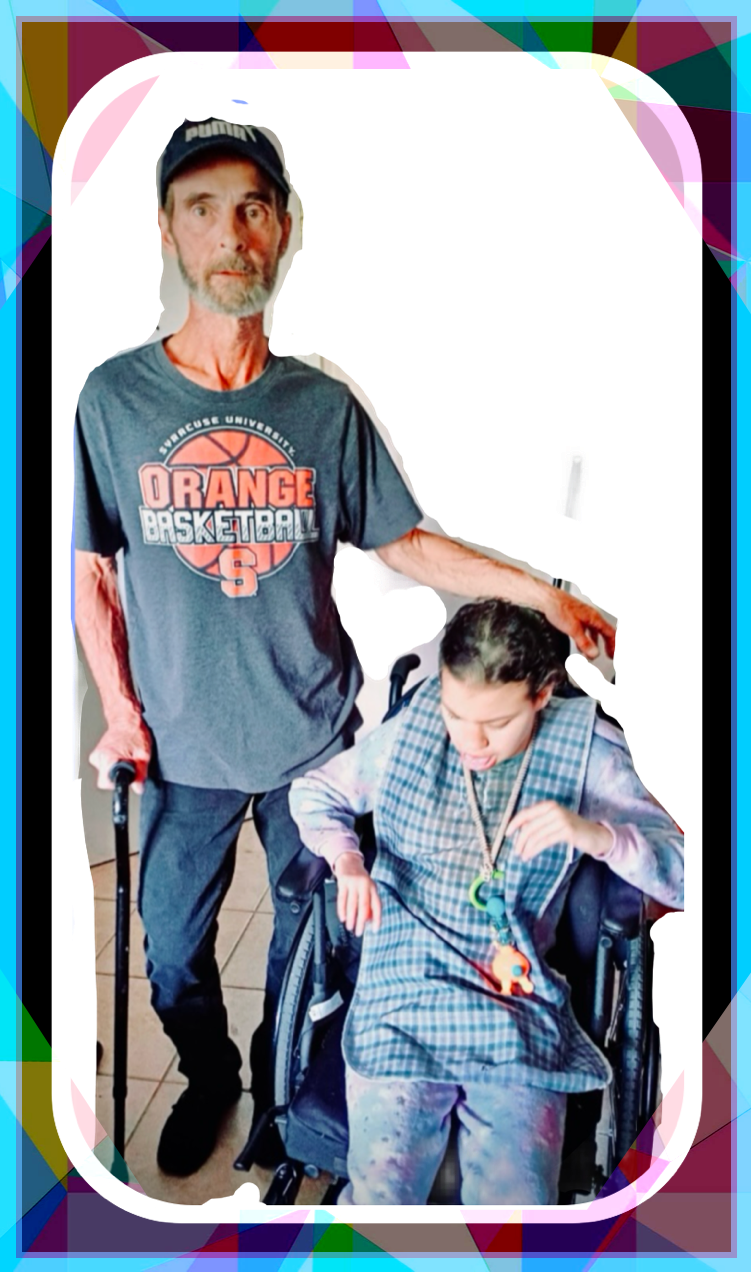
Ottawa — A 16-year-old girl with Spastic hemiparesis associated with schizencephaly and severe global developmental disorder / ASD. has been denied emergency shelter by the City of Ottawa because she is deemed “too loud,” according to officials. Her name is Kielyn. She is medically fragile, nonverbal, and fully dependent on her grandfather Leo for daily care. He is her only family since they had to separate from the rest of their household. The only one left to be there for her through countless hospital stays, surgeries, and the emotional trauma of living with a disability. But now, the City of Ottawa is forcing them apart, threatening Kie with institutionalization and condemning Leo to a life of isolation.
Kie and Leo were evicted when their home was rezoned for luxury condos. Kie’s mother had make the difficult descisionto leave for Quebec in search of cheaper rent so she could care for her 4 other children, leaving Leo with no choice but to call on Ottawa’s Housing Services for emergency shelter. When Leo sought help, he was told that Kie’s disability-related behavior made her “too loud” for other tenants, that she might interfere with other tenants reasonable enjoyment, and that Kie could present as a “liability issue”.The only option offered to him was to place Kie in a care home and have Leo enter Ottawas shelter system as a single man.
This is not an option — it is a death sentence to Kie’s and Leo’s well-being and the quality of their future.
The Reality of Institutionalizing
To place a disabled 16-year-old in a care home is not a simple separation. It is the institutionalization of a vulnerable child who will be exposed to neglect, abuse, and emotional trauma. Care homes in Ontario are overcrowded, underfunded, and notorious for chemical sedation of residents — a practice that will rob Kie of her agency, her dignity, and her quality of life. The emotional toll of separation from her grandfather, the only person who has been a stable presence in her life, will likely lead to severe psychological harm — trauma she will carry with her for the rest of her life. For someone already living with complex medical needs, this would be nothing short of criminal.
These are not theoretical risks — they are the real, well-documented consequences of institutionalizing disabled individuals in Ontario. Care homes are overcrowded and understaffed. They are places where vulnerable people, particularly those with disabilities, are often treated as burdens rather than human beings.
It’s also worth noting that many care homes have been exposed for forcing medication on residents as a way of managing difficult behaviours, something that Kielyn — a young, disabled girl — would have little ability to resist. This is abuse. Abuse that Leo will go to great lengths to protect his granddaughter from having to experience.
Leo’s Fate: Homelessness as a single white aging male.
As for Leo, the alternative provided to him is equally disturbing. Leo has been told he will have to enter the men’s shelter system as a single male and wait for an appropriate housing space. For a man who has just undergone open-heart surgery, and is already caring for his sick granddaughter, this is both physically impossible and deeply isolating. Leo is not only facing the prospect of being separated from Kielyn — he will be forced into a system that does not accommodate his needs as a caregiver. Nor will they accommodate his needs as someone needing medical care himself
The City’s solution to house him as a single male is both an insult to his humanity and a reflection of how broken and indifferent the system has become. He may be forced to wait months — if not years — for adequate housing. Facing the iso;lation and trauma of losing care of his granddaughter, as well as being put into a shelter system that will expose him to crime, violence, drug and alcohol use and additional compounding of mental and physical decline without adequate support. Single males face significant barriers in accessing accommodations that can meet both their basic needs and the needs of their families, let alone a single aging white male who requires extensive medical care. The shelter system is overcrowded, underfunded, and hostile to men like Leo, whose only crime is trying to protect his granddaughter.
Moreover, the loneliness Leo will face in this system is staggering. Shelters are not places for connection or community; they are places of survival. He will be treated as just another statistic, just another homeless man in a sea of desperate faces. The chances of him being able to reunite with Kie — a child he’s been caring for, the child who depends on him for everything — in this system are virtually nonexistent. The entire situation is a setup for failure, one where both Leo and Kie will pay the price for the systemic neglect they are being subjected to.
This entire situation is a gross violation of basic human rights and an utter failure of the City of Ottawa. To deny emergency shelter to a disabled child and her caregiver because of “noise complaints” and “liability issues” is morally indefensible and criminally negligent. It is the worst kind of systemic abuse, the kind that targets the most vulnerable — the disabled, the elderly, the families who have no one to turn to.
The City of Ottawa has a responsibility to provide safe, dignified housing to all residents — not to make arbitrary, discriminatory decisions about who is “too loud” to deserve shelter. Forcing this family to separate, subjecting Kie to the trauma of institutionalization, and abandoning Leo to an overcrowded, dangerous shelter system is inhumane, unjust, and intolerable.
We are calling on the City of Ottawa, its Housing Services department, and all responsible officials to promptly provide a safe and accessible shelter for Leo and Kie, and ensure that no other disabled individual or family is subjected to this level of cruelty. This cannot be allowed to stand.
This is a family in crisis, punished by a system that pretends to care.
This is how people get destroyed by red tape.
This is how trauma compounds.
This is what happens when cities put profit over people.
We demand emergency shelter for Leo and Kie, together.
We demand Ottawa end discriminatory shelter policies against people with disabilities.
We demand protection for families, not forced separation.
Immediate Demands
1. Emergency family shelter placement for Leo and Kie, with full accommodation for Kie’s medical and disability needs.
2. A full review of all shelter denials involving disability and behavior-based decisions and any cases which a family has been denied access to services or separated for any reason, with immediate action to revise policies that discriminate against disabled individuals or separate children from their families.
3. A ban on the practice of unnecessarily institutionalizing disabled children into underfunded, abusive care home. Especially when it goes against their caretakers wishes.
4. Immediate action to provide adequate housing for single male caregivers like Leo, with priority for those who were previously caring for dependent minors and support to reunite these children with their families.
📢 Share this. Speak up. Call your city councillor. Demand justice.
📍Contact:
Sarah O’Connell (3rd Eye Street Media)
📧 s.oconnell94@outlook.com
📞 613-816-2303
All individuals involved agree to speak publicly and be quoted.
#OttawaFailingFamilies #KiesStory #DisabilityJustice #HousingIsAHumanRight #StopTheSeparation
Press Availability
Sarah O’Connell (3rd Eye Street Media), Leo (guardian), and all individuals involved in this case are available for interview, quotes, or on-the-record media coverage. Contact details above.
Add comment
Comments